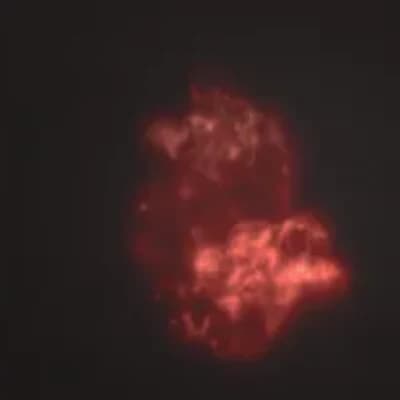
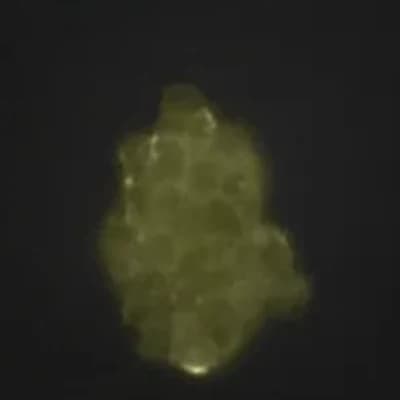
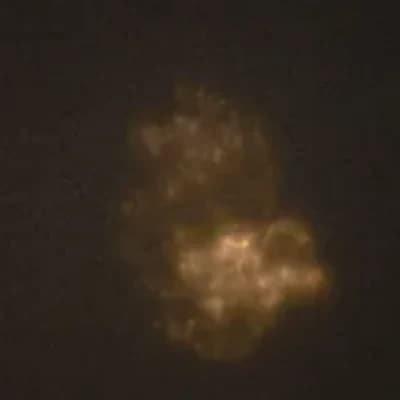
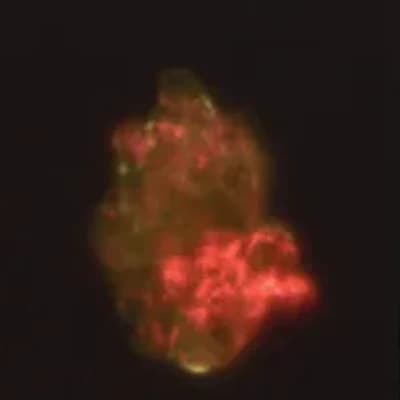
One bench.One slide.Seven markers.Same day.

A cytology sample becomes a seven-marker result in under four hours, with no cell block.

Hybrid Microscope software showing multiplex cytology channels
The workflow

Five steps, one workstation, one technologist.

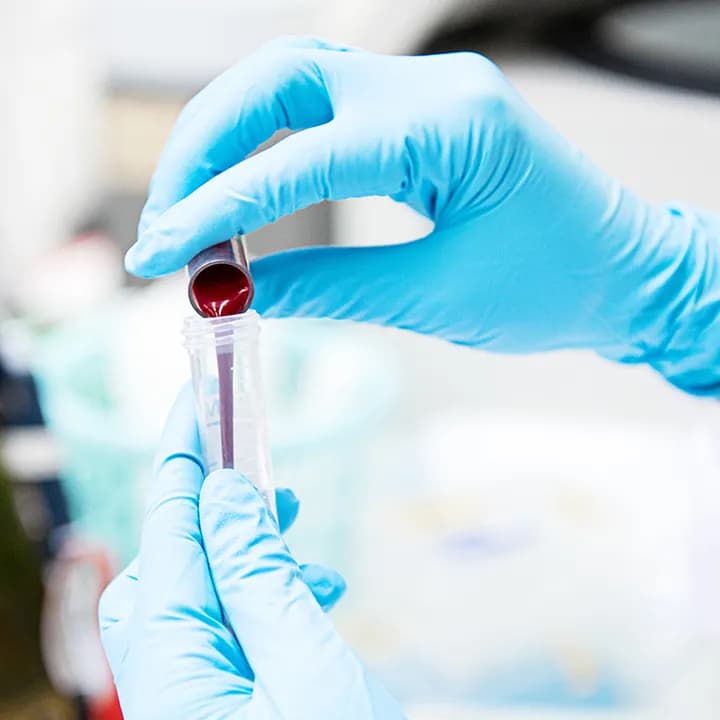
  1. A liquid sample poured into a sample tube
    01Sample

    Effusions, smears, or imprints.

  2. A technologist pipetting a sample
    02Prepare monolayer

    Cytocentrifugation, smear or imprint onto one slide.
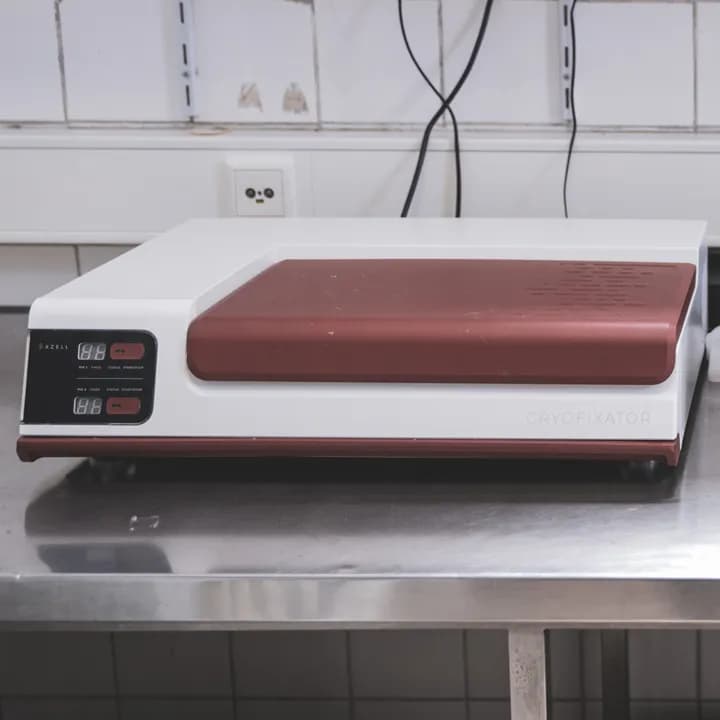
  3. The Cryofixator on a laboratory bench
    03Cryofixation

    The Cryofixator preserves cells and antigens in minutes, without formalin or embedding.
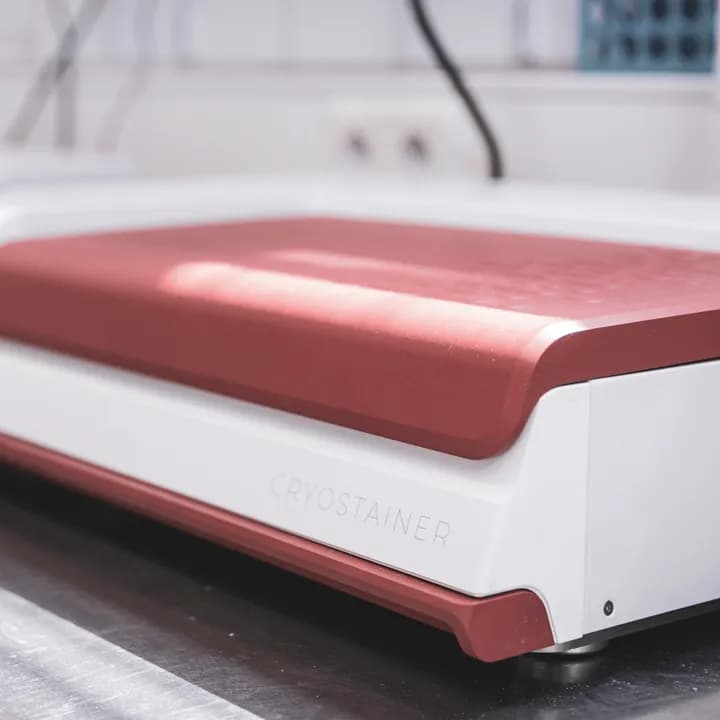
  4. The Cryostainer on a laboratory bench
    04Multiplex stain

    The Cryostainer applies seven antibodies and a nuclear stain in one automated run.
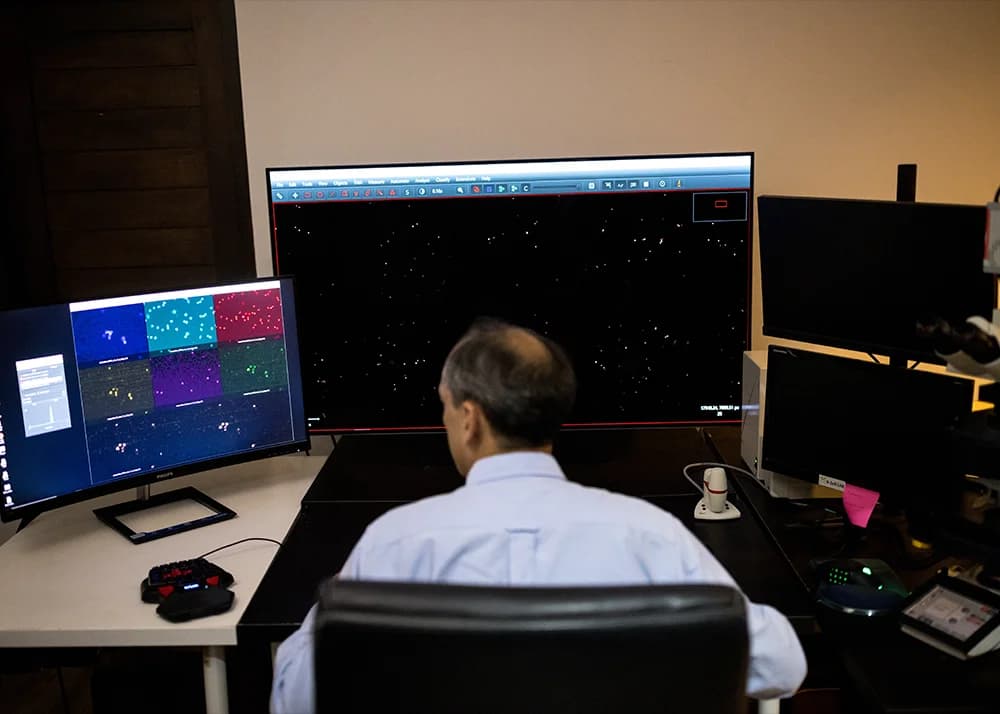
  5. Reviewing multiplex channels at the Hybrid Microscope workstation
    05Digital review

    The cytologist reviews each channel and the merged image.

Sample inResult on screen · under 4 hours

What the slide shows

Seven markers, side by side and merged.

Each channel is one antibody on the same cells. The merged view shows how they overlap.

Cryophore™ Ascitic Fluid panel, ascitic effusion.

  • PAX8 channel of the same cellsPAX8
  • SATB2 channel of the same cellsSATB2
  • CK19 channel of the same cellsCK19
  • EpCAM channel of the same cellsEpCAM
  • CD45 channel of the same cellsCD45
  • Calretinin channel of the same cellsCalretinin
  • CK7 channel of the same cellsCK7
  • All channels of the same cells, mergedMerged
Time saved

Under four hours instead of a day and a half.

  • One technologist
  • One workstation
  • No sample transfers

Source: single-site time-motion study, German hospital pathology institute, 2022–2023, 27 pleural-effusion samples processed in both workflows.

Cell block + serial IHC38 h 46 min
X-ZELL multiplex cytology3 h 23 min

Sample to screen.

What goes in

Routine cytology material

  • Pleural, pericardial and ascitic effusions
  • Smears and imprints
What comes out

Three CE-IVDR panels

Where the slide goes next

Most cases are resolved on the first slide. Where more is needed, the remaining material goes to cell block as before — nothing is lost.

See it on your own samples.